
Forward Thinking
Welcome to Forward Thinking, where we explore the ideas, insights, and strategies shaping the future of leadership, organizational change, and culture. This is where we share what we’re learning in the field—what’s working, what’s shifting, and what leaders need to be paying attention to. Grounded in practice and informed by research, our posts are designed to help you think more critically, act more intentionally, and lead more effectively in times of change.
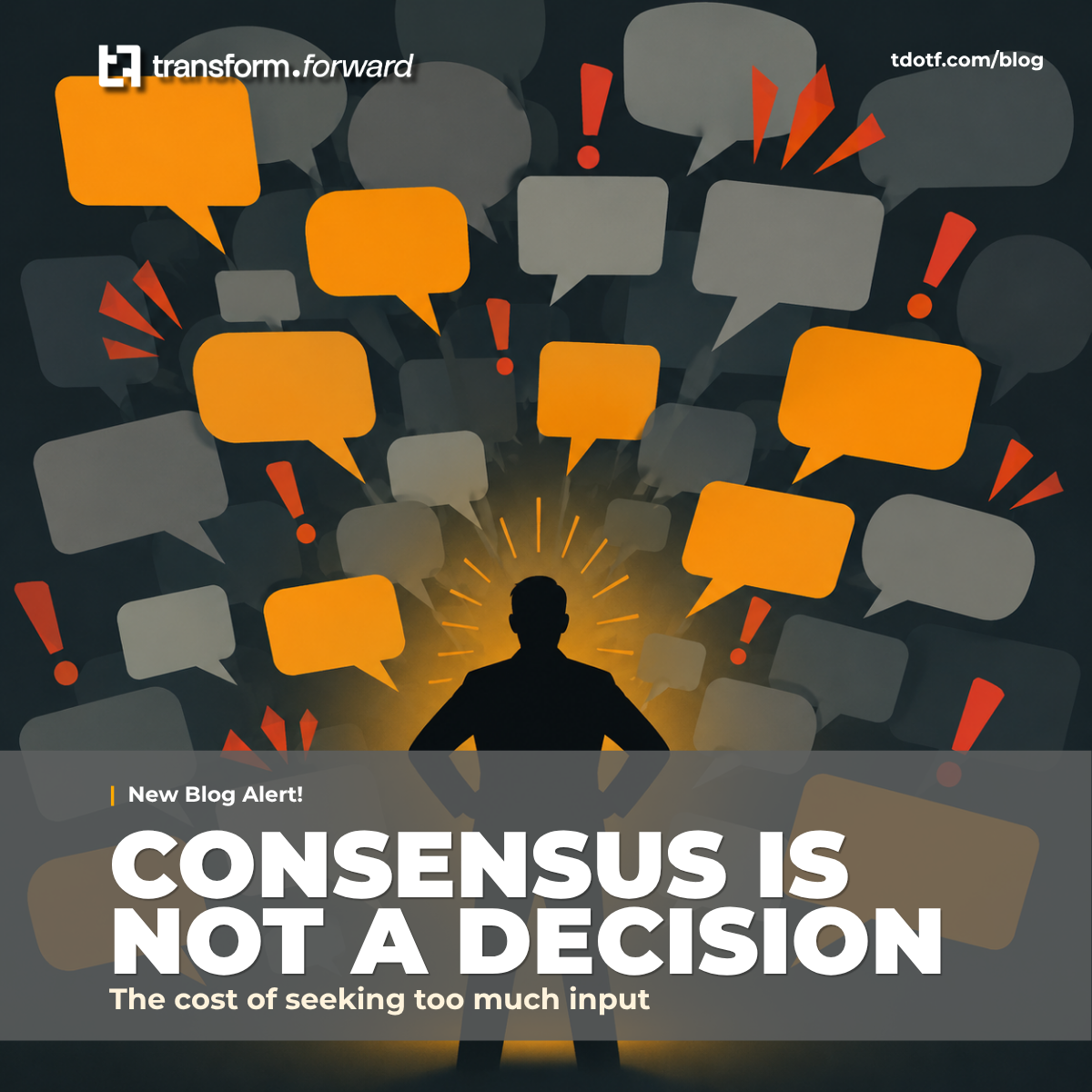
Consensus Is Not a Decision
Many leaders who call themselves collaborative are, without meaning to, avoiding the discomfort of ownership. This piece names three signs the pattern has taken hold, from a reputation for being shaped by whoever spoke last to decisions that never quite stay decided, and makes the case that collaborative leadership was never about avoiding unilateral decisions. It's about knowing exactly when one is required.
Stakeholder engagement can quietly replace real decision-making. Discover three signs of over-listening, and why strong, collaborative leaders still know exactly when to make the call themselves.
Beyond “Good Conversations”: How to Make Qualitative Research Credible, Useful, and Actionable
Qualitative research is more than a collection of good conversations, compelling stories, or memorable quotes. When approached rigorously, it becomes a disciplined process for understanding experiences, identifying patterns, testing assumptions, and producing credible findings. This post translates qualitative rigor into practical language and explores how thoughtful questions, multiple perspectives, triangulation, transparent analysis, and honest reporting can turn lived experience into evidence that supports meaningful organizational change.
Why More Data Doesn’t Mean More Clarity
More data doesn't always lead to more clarity. Without a clear framework, additional inputs can fragment understanding, slow decisions, and obscure the very signal teams are trying to find. We explore why volume isn't a substitute for synthesis, when quantity actually matters in research, and how to design a data approach built for decision-making rather than collection.