Match Your Message to Your Audience: A Framework for Audience-Centered Data Storytelling
Have you spent weeks collecting data, analyzing results, and crafting recommendations? You share the presentation to one audience, and they love it. But then you share the exact same presentation with another audience… And the response is underwhelming? When you’re telling your story with data in large, cross-functional organizations, you need to consider genre, pacing, characters, and plot. Of all these aspects of storytelling, audience matters most.
Before creating your next report, presentation, or executive summary, pause and ask yourself three simple questions:
Who is my audience?
What do I want them to do after hearing this story?
What type of story will help accomplish that goal?
The data may stay the same, but the story you’re telling should change.
Start with the Audience, Not the Data
The Data Storyteller’s Handbook by Kat Greenbrook (2026), the audience and communication quadrant (often framed around context, motivation, interest, and influence) maps how data professionals should tailor their strategy based on what an audience already knows and how much they care. Anyone can use it to frame their work.
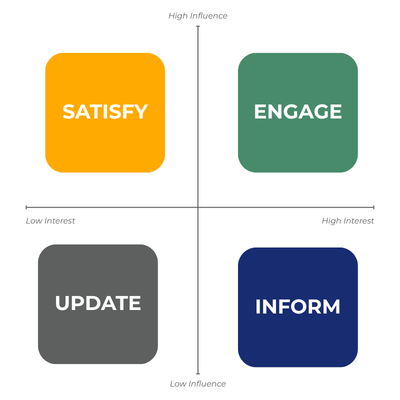
Before choosing a storytelling approach, consider where your audience falls along two dimensions: interest and influence. Interest reflects how invested the audience is in the work and its outcomes. An audience with low interest may only need the key takeaway, while a highly invested audience may want to understand progress, challenges, implications, and what comes next. Influence reflects how much ability the audience has to shape decisions, including resourcing and prioritization. Audiences with less influence may primarily need to understand the findings, while highly influential audiences may need a story that builds confidence, spurs funding, invites collaboration, or inspires action. Think of it this way: interest helps determine how much of the story your audience needs; influence helps determine what you need the story to accomplish.
Are you seeking to inform your audience? Some audiences simply need to understand what happened without being overwhelmed by methodological details or extensive analysis. Campus committees, new staff members, or faculty partners, for example, may simply want to know what was learned, why the findings matter, and what will happen next. For these audiences, the goal is clarity over complexity, presenting the assessment results in a way that is easy to understand and provides enough context to support awareness without requiring deep familiarity with the project.
Consider:
Lead with the headline or key takeaway before sharing supporting data.
Limit charts and technical language, focusing instead on what the findings mean.
End with a simple "What's next?" statement so the audience leaves with a clear understanding of future actions.
Are you hoping to simply update your audience? Other audiences already know the initiative and care less about the full story than about signs of progress. Senior leaders receiving an annual report or division directors reviewing quarterly updates often want to know what has improved, what has changed since the last report, and whether the work remains on track to achieve its goals. These communications should emphasize momentum, highlighting key accomplishments and changes while remaining concise and focused.
Consider:
Compare current results to previous reports to demonstrate progress over time.
Organize information around "What's changed?" rather than repeating the full project history.
Keep presentations brief by highlighting only the most meaningful accomplishments, challenges, and next steps.
Are you aiming to satisfy your audience? High-influence stakeholders do not always need every operational detail of an assessment. Instead, they often want reassurance that institutional resources are being invested wisely and that the work is advancing strategic priorities. In these situations, assessment storytelling should demonstrate responsible stewardship, measurable progress, and alignment with institutional goals. Rather than presenting every data point collected, the story should build confidence that the division is making meaningful contributions to student success and organizational effectiveness.
Consider:
Explicitly connect findings to institutional strategic priorities or student success goals.
Highlight outcomes and return on investment before discussing process or methodology.
Focus on a small number of high-impact metrics rather than presenting every available data point.
Are you hoping to meaningfully engage your audience in ongoing partnership or collaboration? Some assessment stories are designed to encourage collaboration and ongoing action, not just provide updates. When the goal is to secure buy-in, build partnerships, or generate support for future initiatives, the story should invite dialogue rather than simply report findings. An engaging assessment story explains what was learned, why those findings matter, and opens the door to a shared conversation about next steps. In this way, stakeholders actively participate in assessment rather than simply receive it.
Consider:
End your presentation with a discussion question instead of a conclusion slide.
Frame recommendations as opportunities for collaboration rather than completed decisions.
Highlight where additional perspectives, expertise, or partnerships could strengthen the work.
Not Every Story Needs the Same Level of Polish
Just like the audience, the type of story we prepare matters. While all stories should be grounded in evidence, the amount of detail, transparency, and emphasis should reflect the purpose of the communication and the audience receiving it. Some situations call for celebrating success, while others require a balanced discussion of progress and opportunities or an honest reflection on challenges. Choosing the right approach helps ensure your story resonates with its audience and achieves its intended goal (Strine-Patterson, 2022).
High-gloss stories celebrate success and showcase positive outcomes. They suit broad, public-facing audiences when the goal is to build awareness, generate excitement, or reinforce institutional strengths.
Consider:
Lead with a compelling success story or key accomplishment.
Highlight a few memorable metrics instead of every result.
End with a clear statement of impact tied to your mission.
Color-print stories balance accomplishments with opportunities for growth. They work well with stakeholders, donors, and campus partners who want evidence of success while also understanding where future investment or collaboration could make a difference.
Consider:
Celebrate progress while acknowledging what's next.
Pair successes with opportunities for continued improvement.
Frame challenges as invitations to partner and innovate.
Grayscale stories prioritize transparency and learning. Designed primarily for internal audiences, they openly discuss both successes and challenges to support reflection, planning, and continuous improvement.
Consider:
Share strengths and areas for improvement with equal honesty.
Explain what was learned and how it will shape future decisions.
Invite feedback and discussion to strengthen the next cycle of work.
The Best Story Is the One Your Audience Can Hear
Even the strongest findings can fall flat if they aren't framed for the audience. Professionals must think beyond simply reporting numbers and consider who is listening, what they care about, and what they’ll do next. Measure your success in how your audience responds, not how many charts you can squeeze into your presentation.
Ultimately, data storytelling goes beyond simply reporting what you learned. It is about helping each audience understand what the data means for them. The right story can build understanding, strengthen confidence, spark collaboration, or move a decision forward. And in organizations where meaningful change often depends on bringing people with different roles, priorities, and perspectives together, how we communicate evidence matters perhaps even more than what we communicate. At transform.forward, we believe data is most valuable when it helps institutions move from insight to action. Customizing your information based on your audience can do exactly that by telling the right story for the people who need to hear it.
So, before you open PowerPoint or build another dashboard, start somewhere else: Start with your audience.
References
Greenbrook, K. (2023). The data storyteller’s handbook: How to create business impact using data storytelling. Rogue Penguin.
Strine‐Patterson, H. J. (2022). Assessment is a leadership process: The multilevel assessment process. New Directions for Student Services, 2022(178-179), 61-76.