
Forward Thinking
Welcome to Forward Thinking, where we explore the ideas, insights, and strategies shaping the future of leadership, organizational change, and culture. This is where we share what we’re learning in the field—what’s working, what’s shifting, and what leaders need to be paying attention to. Grounded in practice and informed by research, our posts are designed to help you think more critically, act more intentionally, and lead more effectively in times of change.
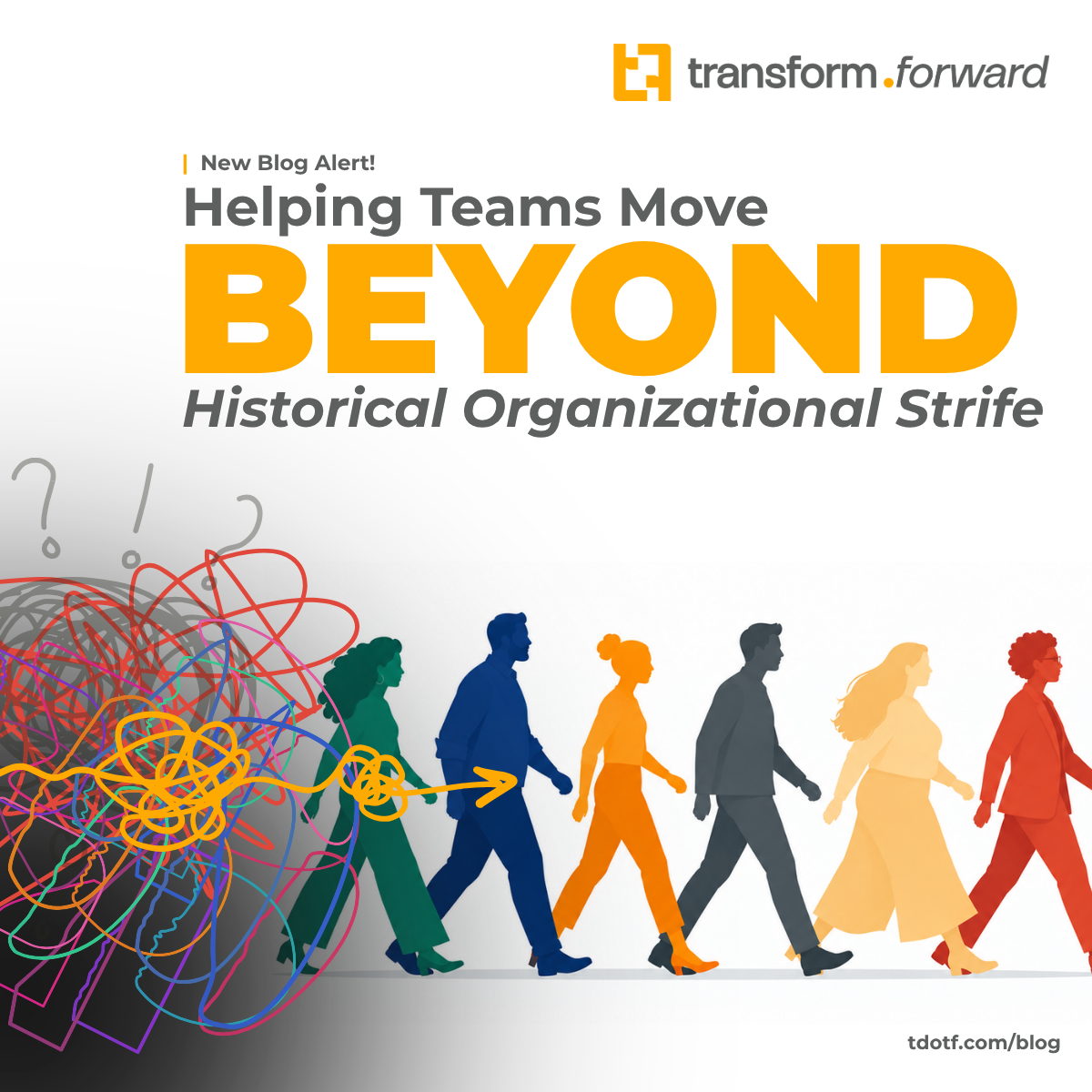
Helping Teams Move Beyond Historical Organizational Strife
When past leadership or systemic disruption turns into legacy friction, teams often get trapped in an endless loop of storming. Discover why forced "air-clearing" town halls backfire and explore four practical steps leaders can take to honor legacy staff, protect new hires, and move their teams forward.
The Myth of the Invisible Facilitator
In certain facilitation circles, neutrality gets treated like a professional virtue. Stay out of the way, hold the space, trust the process. It's a lovely idea, except it's also fiction, and fairly convenient for anyone who'd rather not reckon with the authority the role actually carries. In this post, we explore what facilitation actually controls, why the org chart doesn't stay in the lobby, and what it means to lead a room with real intentionality.
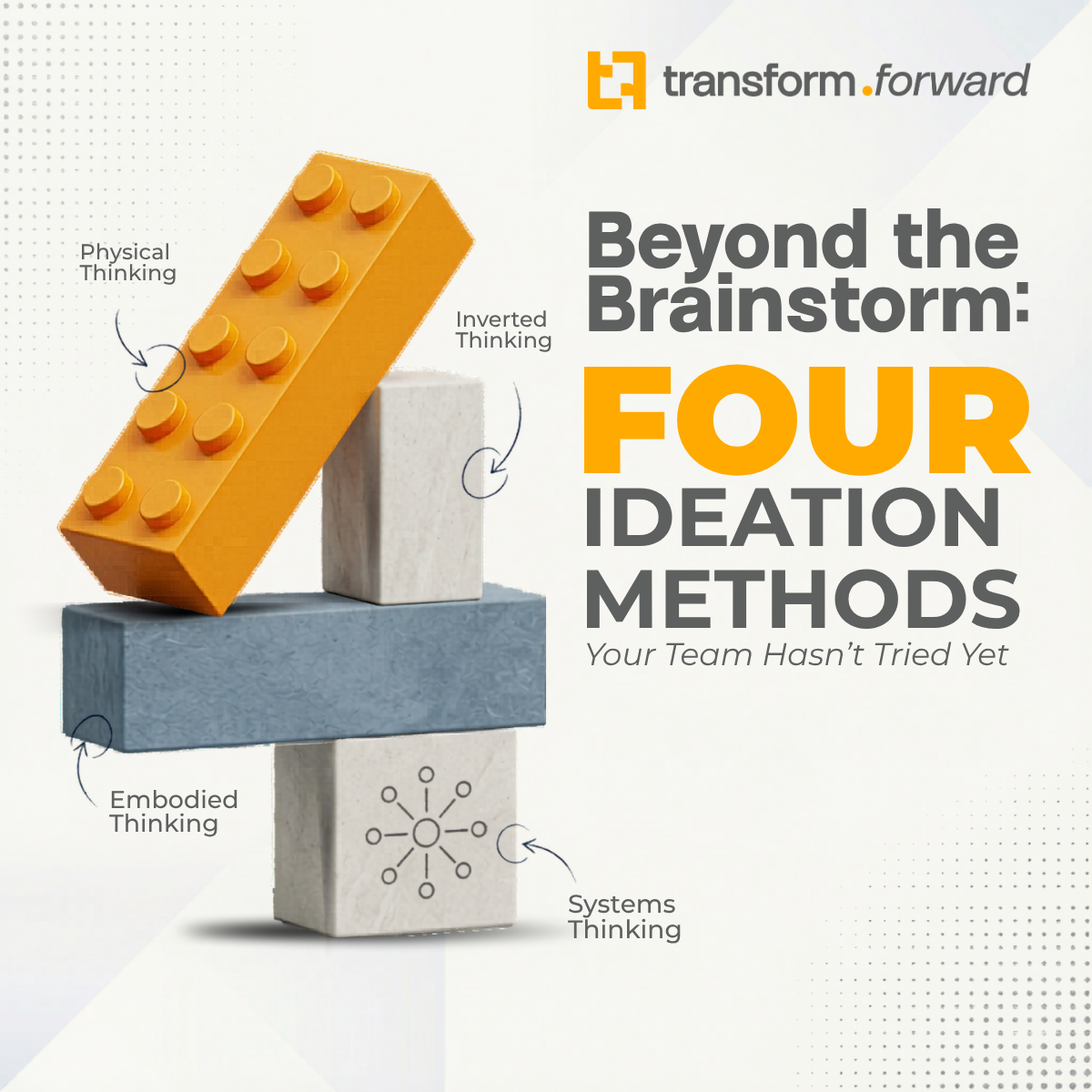
Beyond the Brainstorm: Four Ideation Methods Your Team Hasn't Tried Yet
Most teams have a default ideation format. It probably involves a whiteboard, a pack of markers, and someone who volunteered to be the scribe. It works well enough for routine problems — but for strategic planning, culture design, and decisions with long downstream consequences, "well enough" starts to show its limits.
Here are four ideation methods worth adding to your toolkit. Each one generates a distinct mode of engagement and surfaces things that a standard brainstorm doesn't — from LEGO® SERIOUS PLAY® to future wheels ideation to the surprisingly powerful pre-mortem.
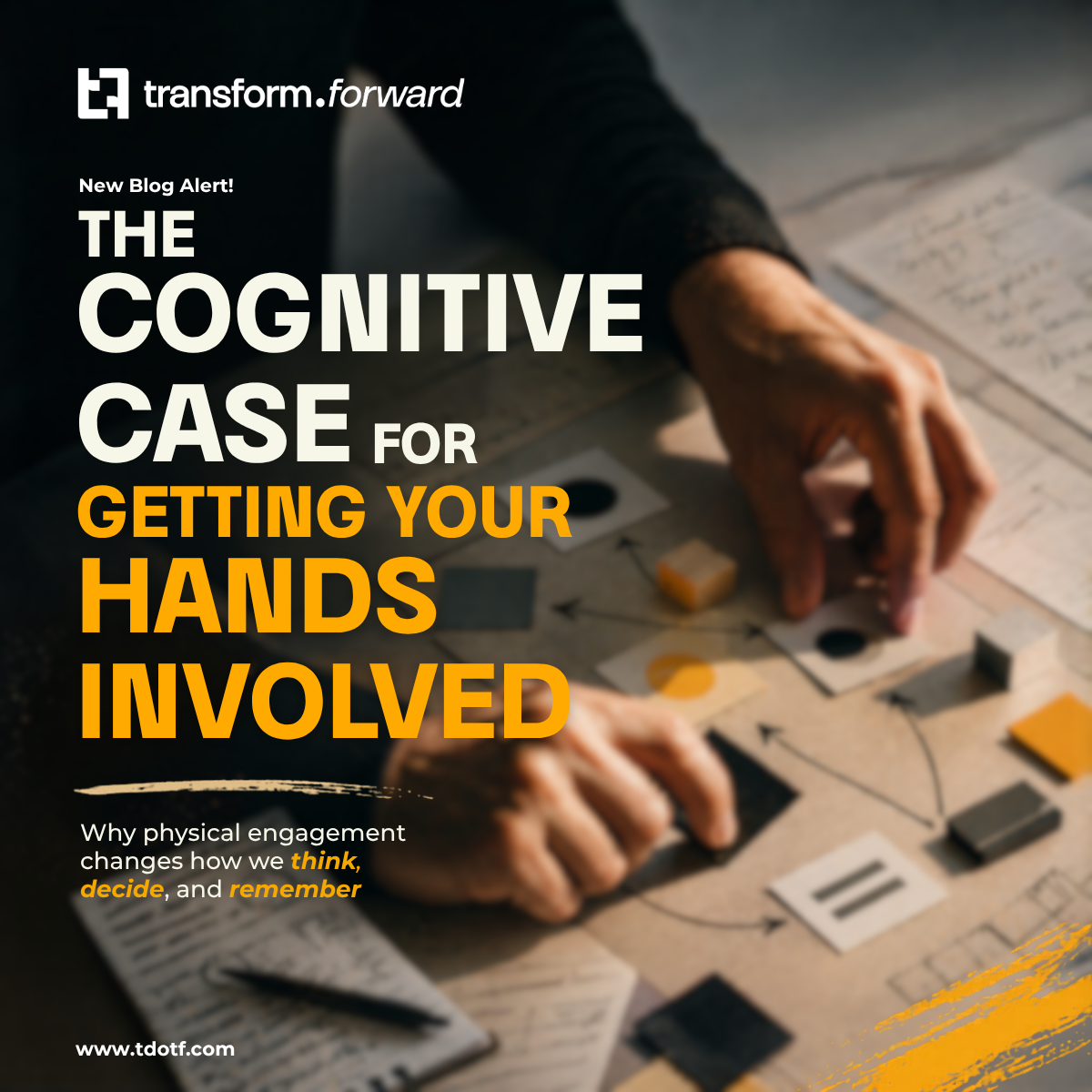
The Cognitive Case for Getting Your Hands Involved
We think better when our hands are involved. The cognitive science behind that concept has been established for decades, and the practice of designing working sessions around it remains genuinely rare, even among people who care deeply about how their organizations make decisions. Giving people something physical to work with, something to sort, place, draw, or arrange, surfaces assumptions that conversation keeps invisible, encodes decisions that verbal agreement leaves fragile, and produces the kind of clarity that most planning sessions promise and rarely deliver.
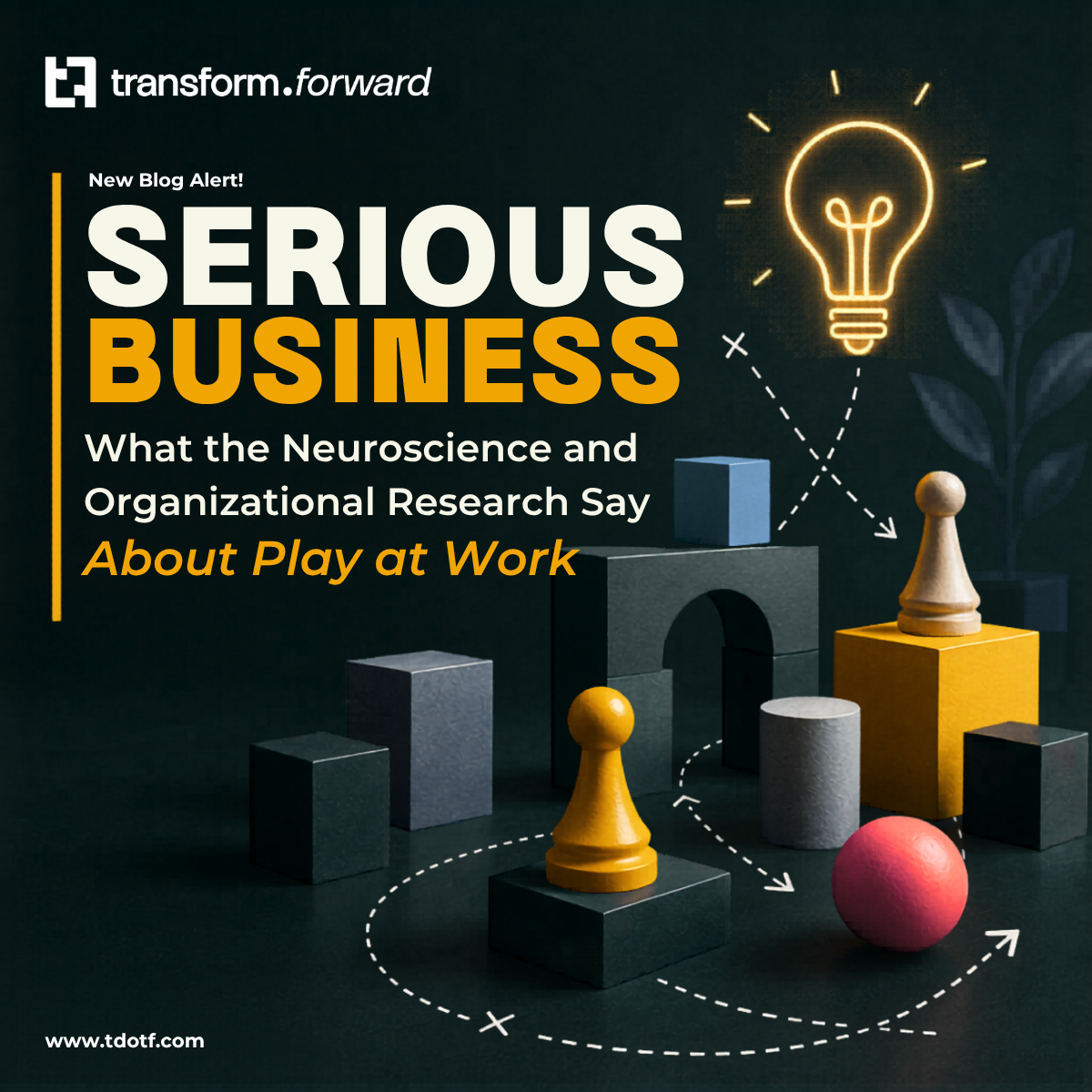
Serious Business: What the Neuroscience and Organizational Research Say About Play at Work
The assumption that play is the opposite of serious work has almost no empirical support. It carries enormous cultural weight, which is part of why it persists, but the research on cognition, adult engagement, and organizational learning tells a consistently different story. When people are genuinely playing, the brain is doing something categorically different from what it does during a standard meeting. That difference has organizational consequences most leaders haven't fully accounted for.
A heads-up that this one goes deeper into the research than our typical posts. The neuroscience of play turns out to be a useful lens for understanding why certain organizational formats consistently underperform.
Why Your Staff Keep Asking for Clarity They Already Have
When a team keeps asking for clarity on something you've already explained, the instinct is to explain it better. Different words, a cleaner slide, a follow-up email. But repeated clarity requests are rarely about missing information, they're signals. Signals of mistrust, fear, or misalignment that don't have a safe way to surface directly. And until you learn to read what's actually behind the question, you can keep clarifying until you're hoarse and it won't stick.
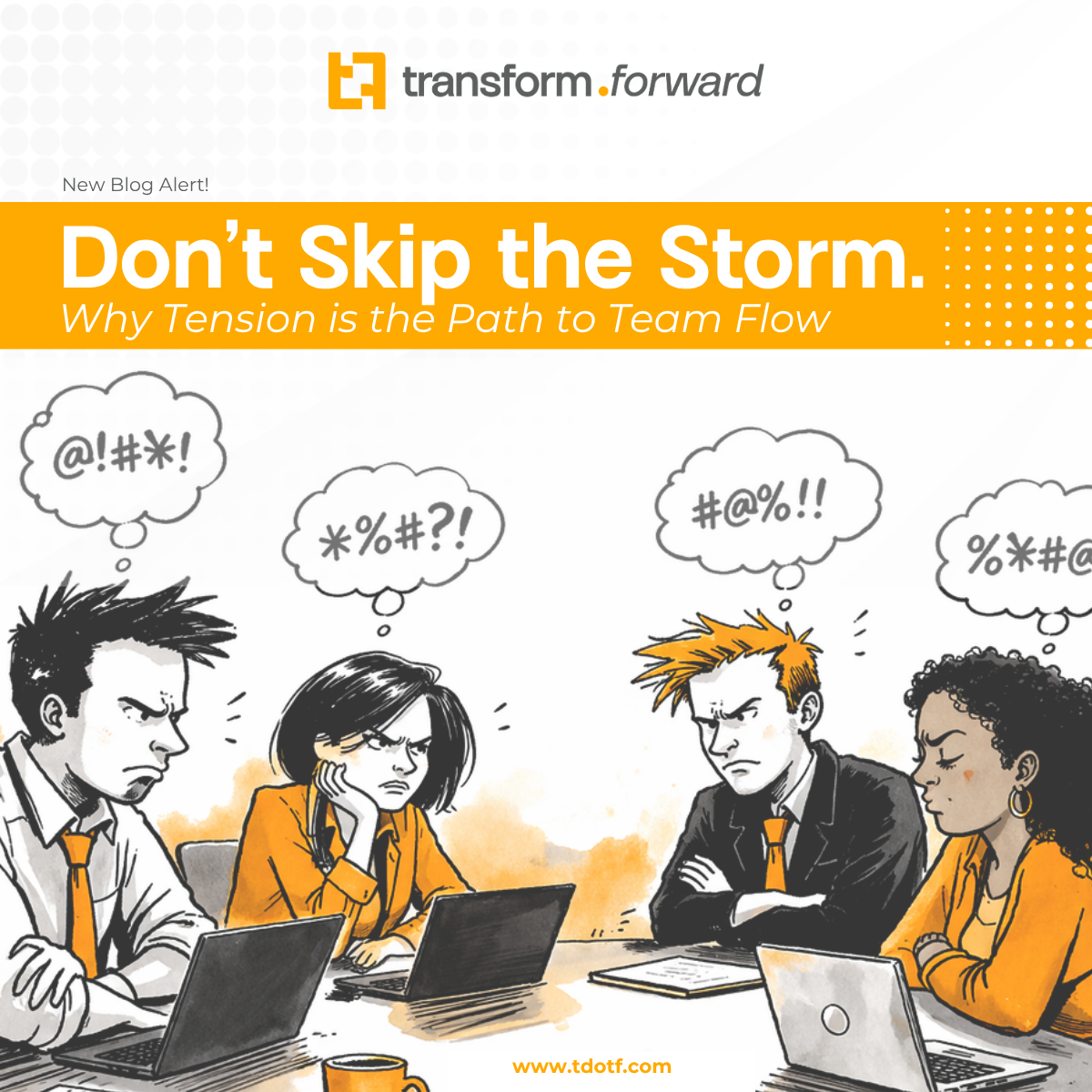
Don’t Skip the Storm - Why Tension is the Path to Team Flow
People love to skip the "Storming" phase of team development because conflict feels uncomfortable. But without the storm, you can't reach the "Norming" or "Performing" on the other side. This post unpacks why tension is a requirement for team flow and how to lead through it respectfully.

From Retreat to Reality - Why great off-sites don't always translate into changed behavior, and what to do about it.
You leave the off-site energized. Commitments made, action items assigned, everyone's initials on the shared doc. And then Monday happens. If that arc feels familiar, you're not alone. And it's not a leadership problem. It's a design problem. Most retreats are built to produce a powerful experience. Very few are built to produce a changed organization. Those are different design briefs, and confusing them is costing leadership teams real momentum. In this post, we unpack why the inflection point problem happens, what the research tells us about behavioral change and context, and four concrete design choices that give post-retreat commitments a fighting chance.
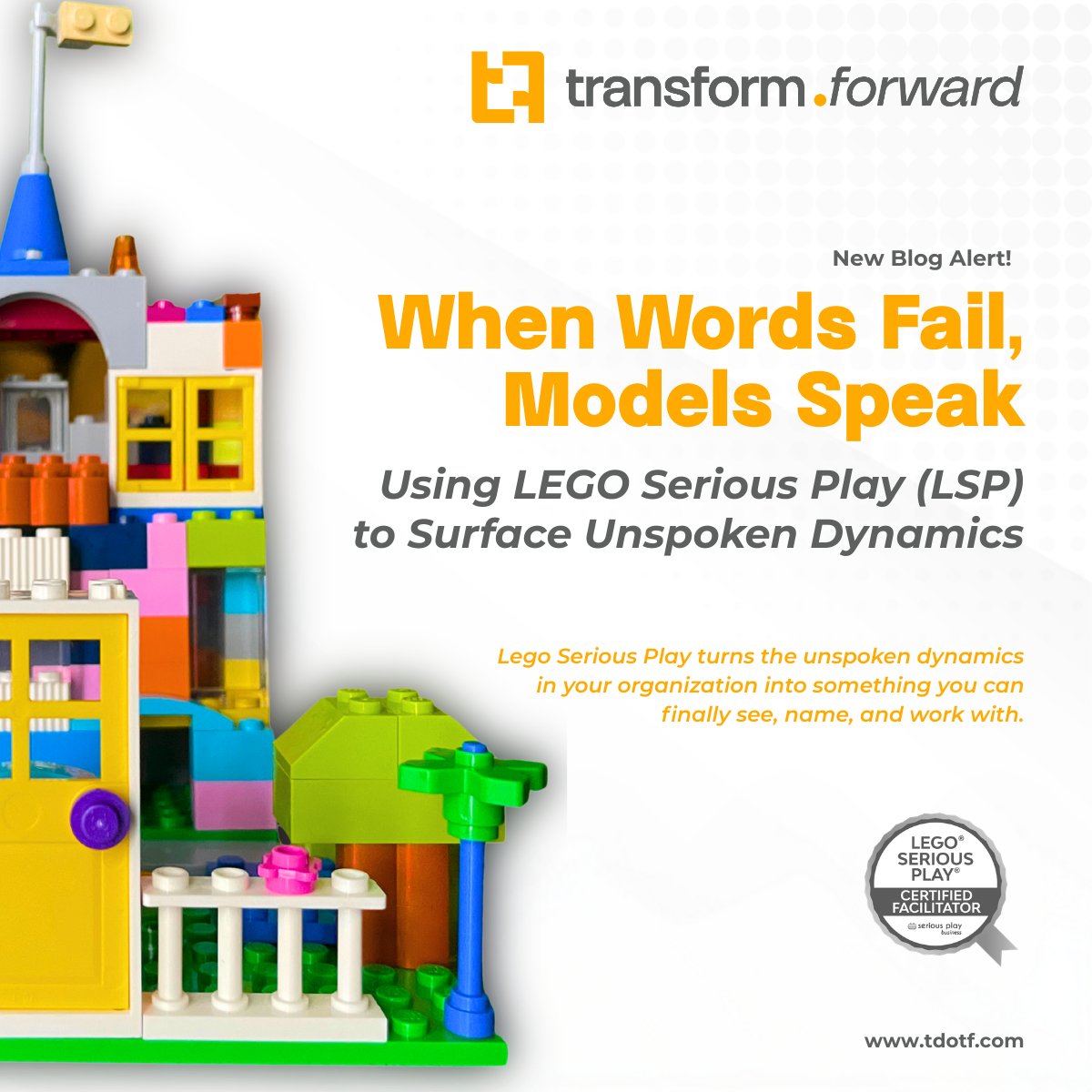
When Words Fail, Models Speak - Using LEGO Serious Play (LSP) to Surface Unspoken Dynamics
Most leadership teams leave their retreats with flip charts full of language everyone agreed to and almost no one fully believes. That is not a failure of intelligence or intention. It is a failure of medium. When organizations face genuine complexity, change, or conflict, structured verbal dialogue consistently underperforms, not because people do not have something true to say, but because the conditions of the room make it nearly impossible to say it. LEGO Serious Play (LSP) operates from a different premise. Rather than asking people to find the right words for what they know, it asks them to build it. And what gets built in those rooms is frequently the most honest organizational data available.

Rethinking Team Dynamics with Personality Insights
Personality assessments are more than just a fun exercise - they're a powerful tool to overcome the fundamental attribution error, our tendency to misinterpret others' behaviors. Learn how these insights foster empathy, reduce friction, and build stronger, more understanding teams.

Maximizing Team Potential with the CliftonStrengths Team Grid
Your team’s greatest potential isn’t just in individual strengths—it’s in how those strengths come together. The CliftonStrengths Team Strengths Grid provides a clear visual of how your team naturally collaborates, where you might have strengths gaps, and how to work more effectively. Discover how to use this tool to maximize your team’s success.