
Forward Thinking
Welcome to Forward Thinking, where we explore the ideas, insights, and strategies shaping the future of leadership, organizational change, and culture. This is where we share what we’re learning in the field—what’s working, what’s shifting, and what leaders need to be paying attention to. Grounded in practice and informed by research, our posts are designed to help you think more critically, act more intentionally, and lead more effectively in times of change.
Consensus Is Not a Decision
Many leaders who call themselves collaborative are, without meaning to, avoiding the discomfort of ownership. This piece names three signs the pattern has taken hold, from a reputation for being shaped by whoever spoke last to decisions that never quite stay decided, and makes the case that collaborative leadership was never about avoiding unilateral decisions. It's about knowing exactly when one is required.
Stakeholder engagement can quietly replace real decision-making. Discover three signs of over-listening, and why strong, collaborative leaders still know exactly when to make the call themselves.
Culture is not the Problem, it’s the Alibi
Leaders reach for "culture" the way a suspect reaches for an alibi, and for the same reason: it sounds reasonable enough that nobody pushes further. This post traces why culture language survives scrutiny that a real explanation couldn't, using a real client example and a one-sentence test for telling a structural problem from an actual cultural one.
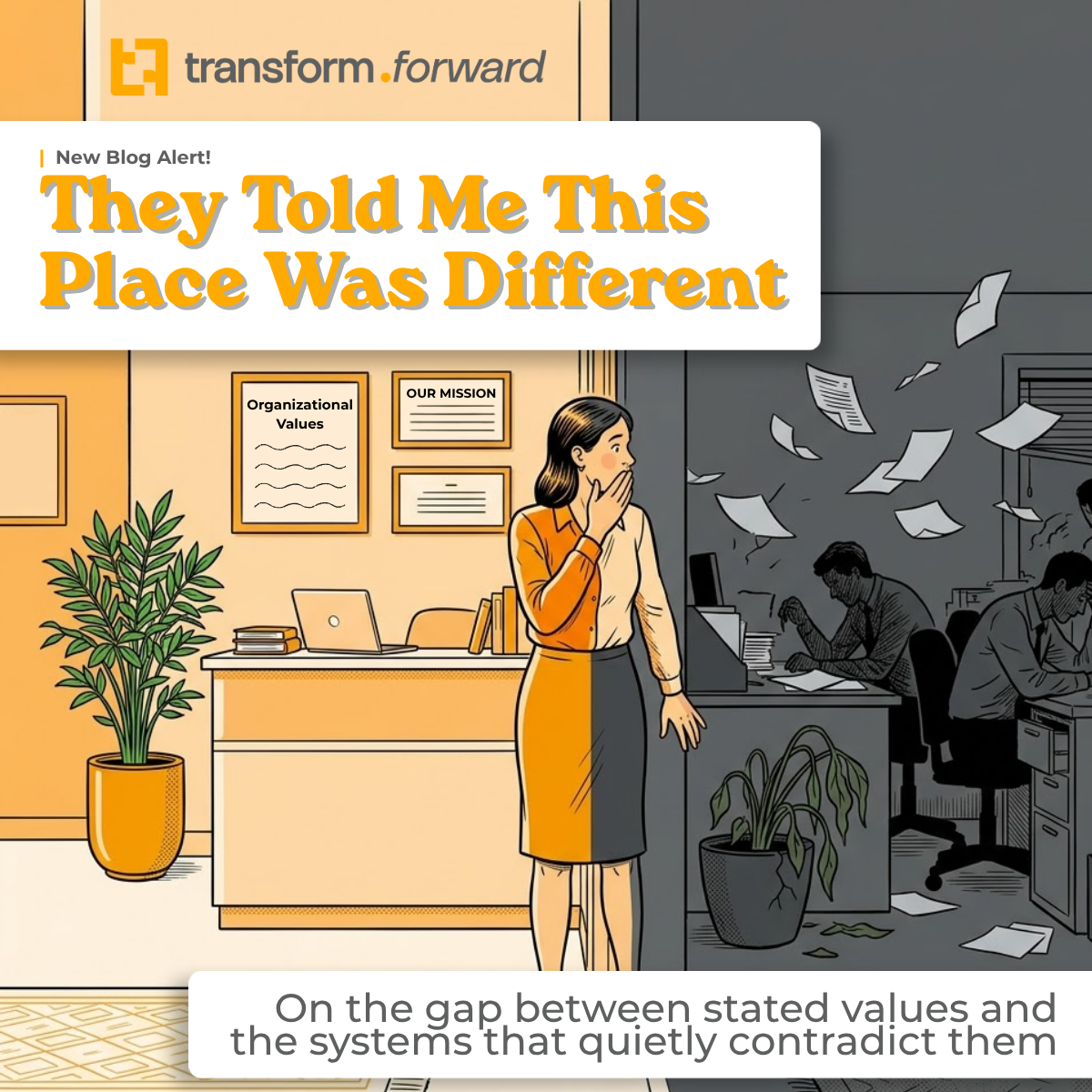
They Told Me This Place Was Different. On the gap between stated values and the systems that quietly contradict them
She wasn't looking for a perfect organization. What she was looking for, and what the interview process seemed to promise, was a place that meant what it said. She accepted the offer with genuine excitement. By month eight, she was quietly updating her resume.
Read the full post to explore the four places where the values gap most reliably lives, the questions worth asking before your next promotion cycle or all-hands, and what it actually takes to close it.
Good Data Starts with Good Ethics
In organizational research, ethics is often treated as a formality. You send the consent form, anonymize the survey, promise confidentiality, and move on. But ethical research is not a checklist. It is a series of choices about how you treat people, how you handle power, and how much trust you are willing to build or break along the way. In this post, we explore why ethical organizational research requires clarity, transparency, care, and a commitment to using data responsibly.
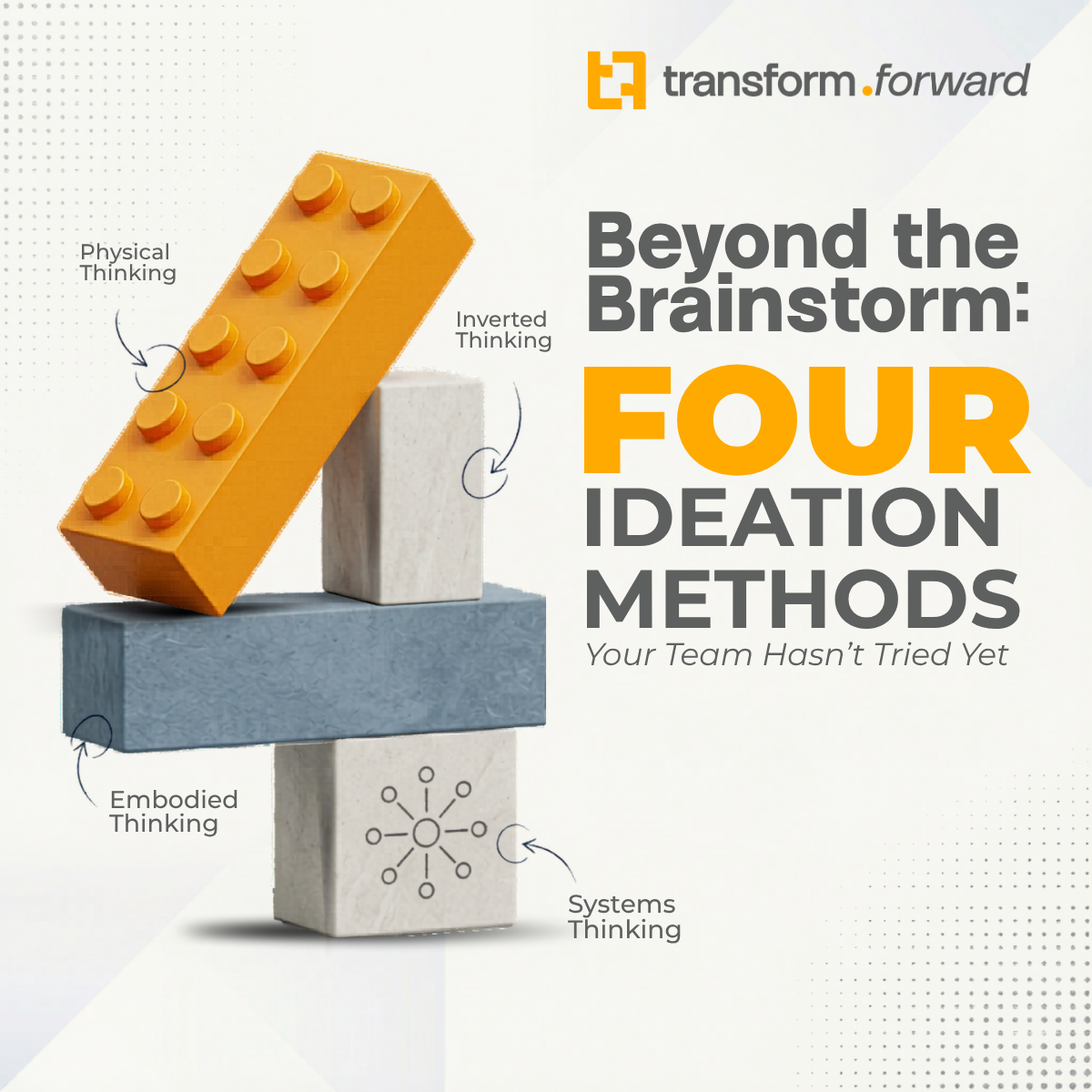
Beyond the Brainstorm: Four Ideation Methods Your Team Hasn't Tried Yet
Most teams have a default ideation format. It probably involves a whiteboard, a pack of markers, and someone who volunteered to be the scribe. It works well enough for routine problems — but for strategic planning, culture design, and decisions with long downstream consequences, "well enough" starts to show its limits.
Here are four ideation methods worth adding to your toolkit. Each one generates a distinct mode of engagement and surfaces things that a standard brainstorm doesn't — from LEGO® SERIOUS PLAY® to future wheels ideation to the surprisingly powerful pre-mortem.
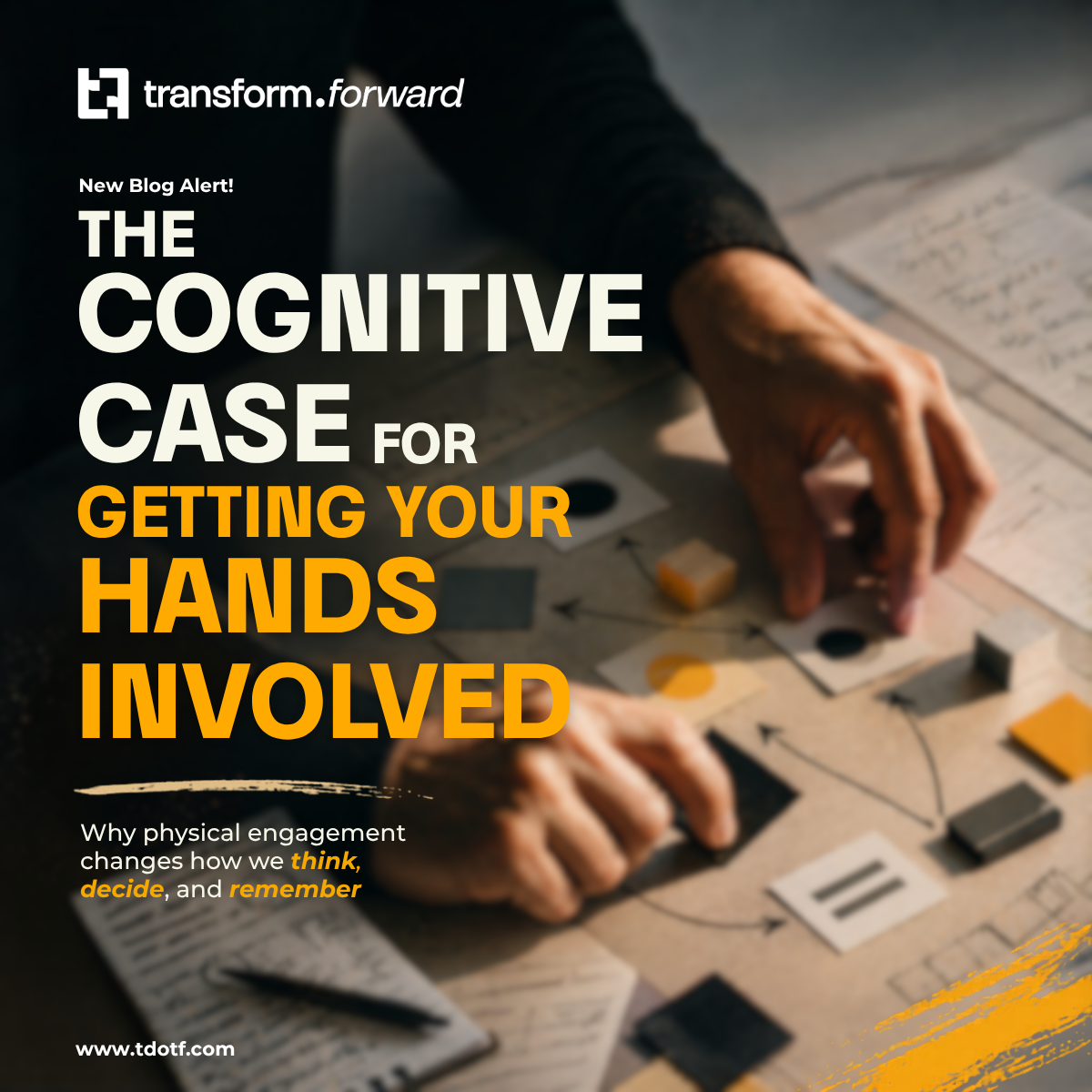
The Cognitive Case for Getting Your Hands Involved
We think better when our hands are involved. The cognitive science behind that concept has been established for decades, and the practice of designing working sessions around it remains genuinely rare, even among people who care deeply about how their organizations make decisions. Giving people something physical to work with, something to sort, place, draw, or arrange, surfaces assumptions that conversation keeps invisible, encodes decisions that verbal agreement leaves fragile, and produces the kind of clarity that most planning sessions promise and rarely deliver.
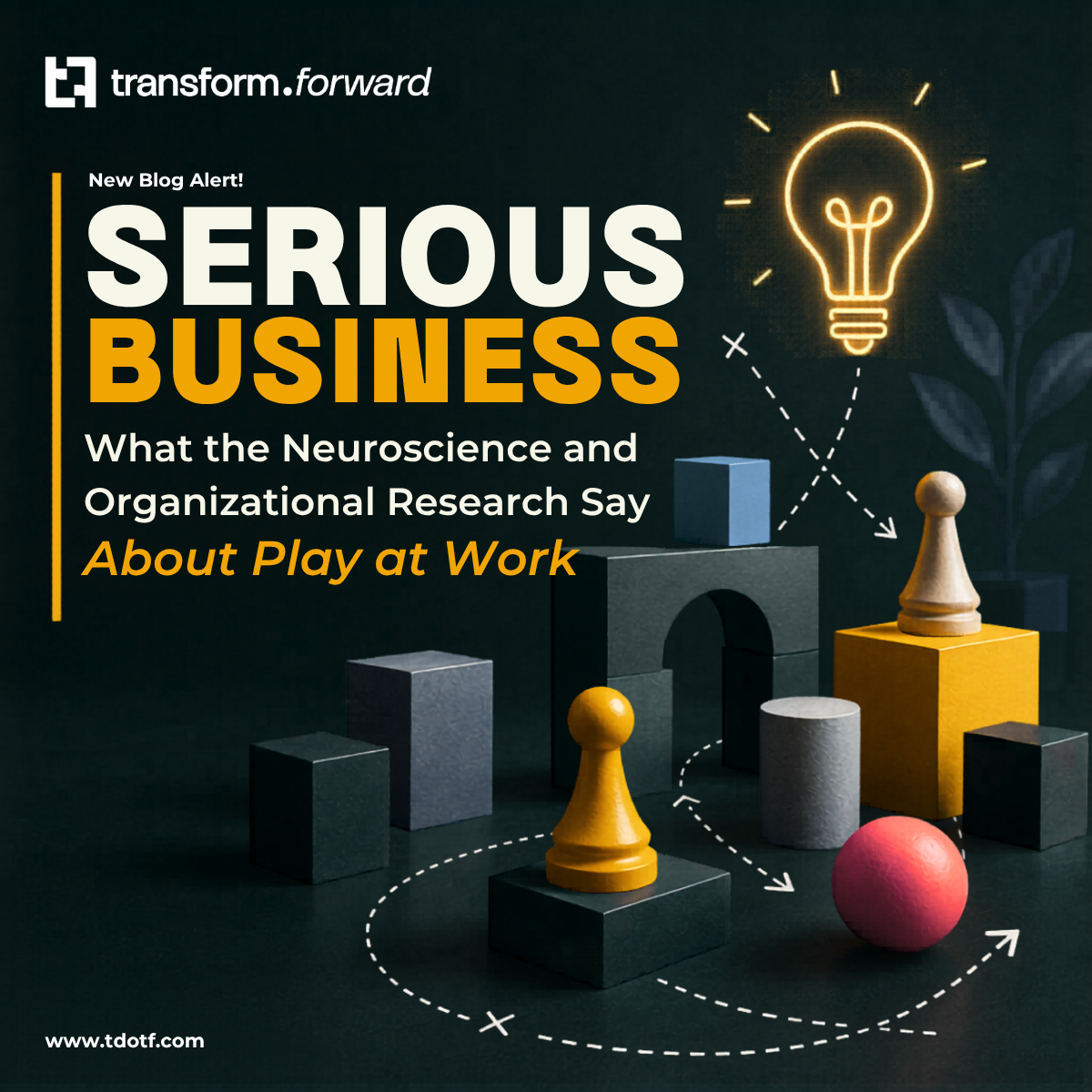
Serious Business: What the Neuroscience and Organizational Research Say About Play at Work
The assumption that play is the opposite of serious work has almost no empirical support. It carries enormous cultural weight, which is part of why it persists, but the research on cognition, adult engagement, and organizational learning tells a consistently different story. When people are genuinely playing, the brain is doing something categorically different from what it does during a standard meeting. That difference has organizational consequences most leaders haven't fully accounted for.
A heads-up that this one goes deeper into the research than our typical posts. The neuroscience of play turns out to be a useful lens for understanding why certain organizational formats consistently underperform.
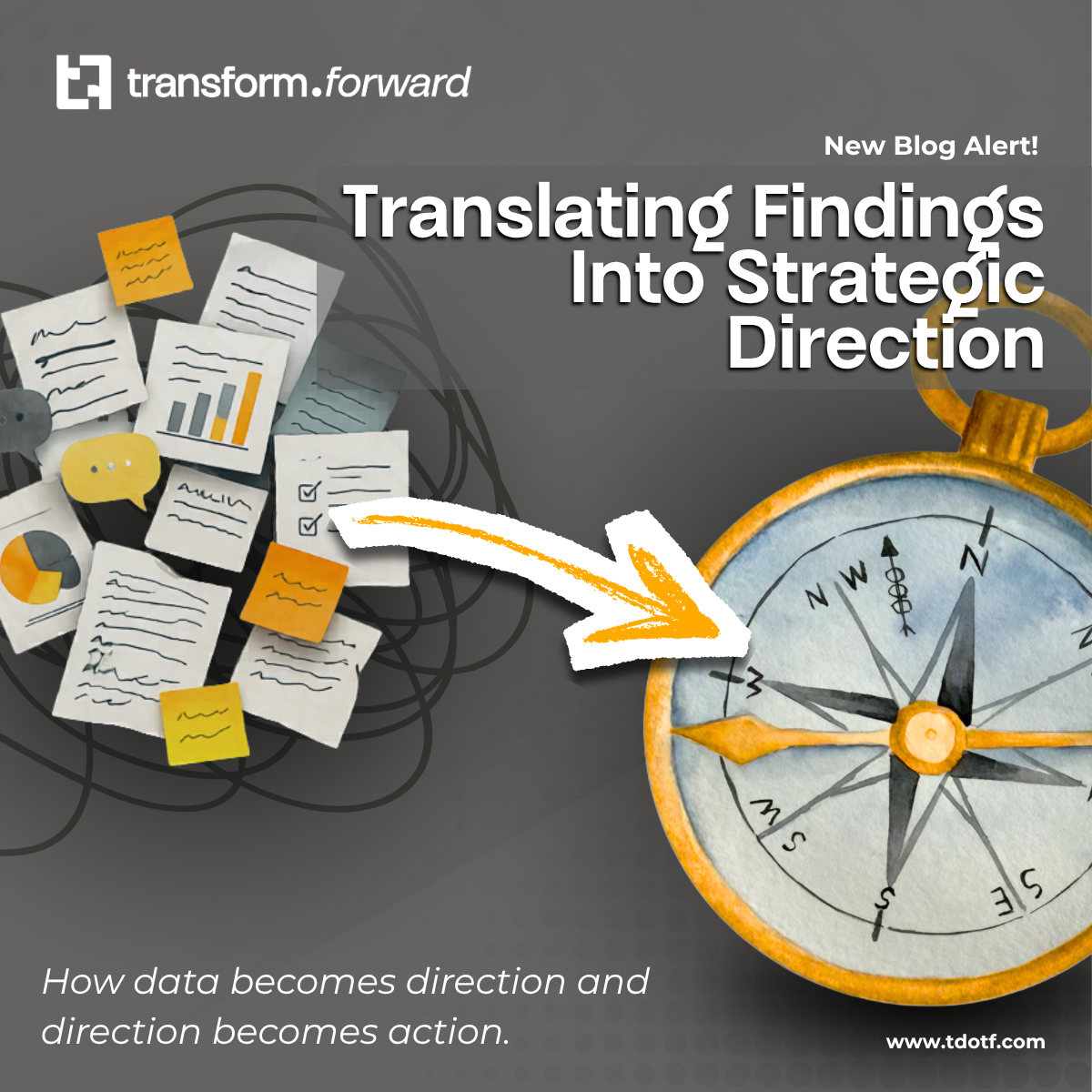
Translating Findings Into Strategic Direction - How data becomes direction and direction becomes action
Organizations often invest heavily in gathering stakeholder input—but struggle to translate those insights into meaningful strategy. This post explores how to move from raw findings to strategic language and actionable priorities, ensuring your data doesn’t just sit in a report, but drives real direction and change.
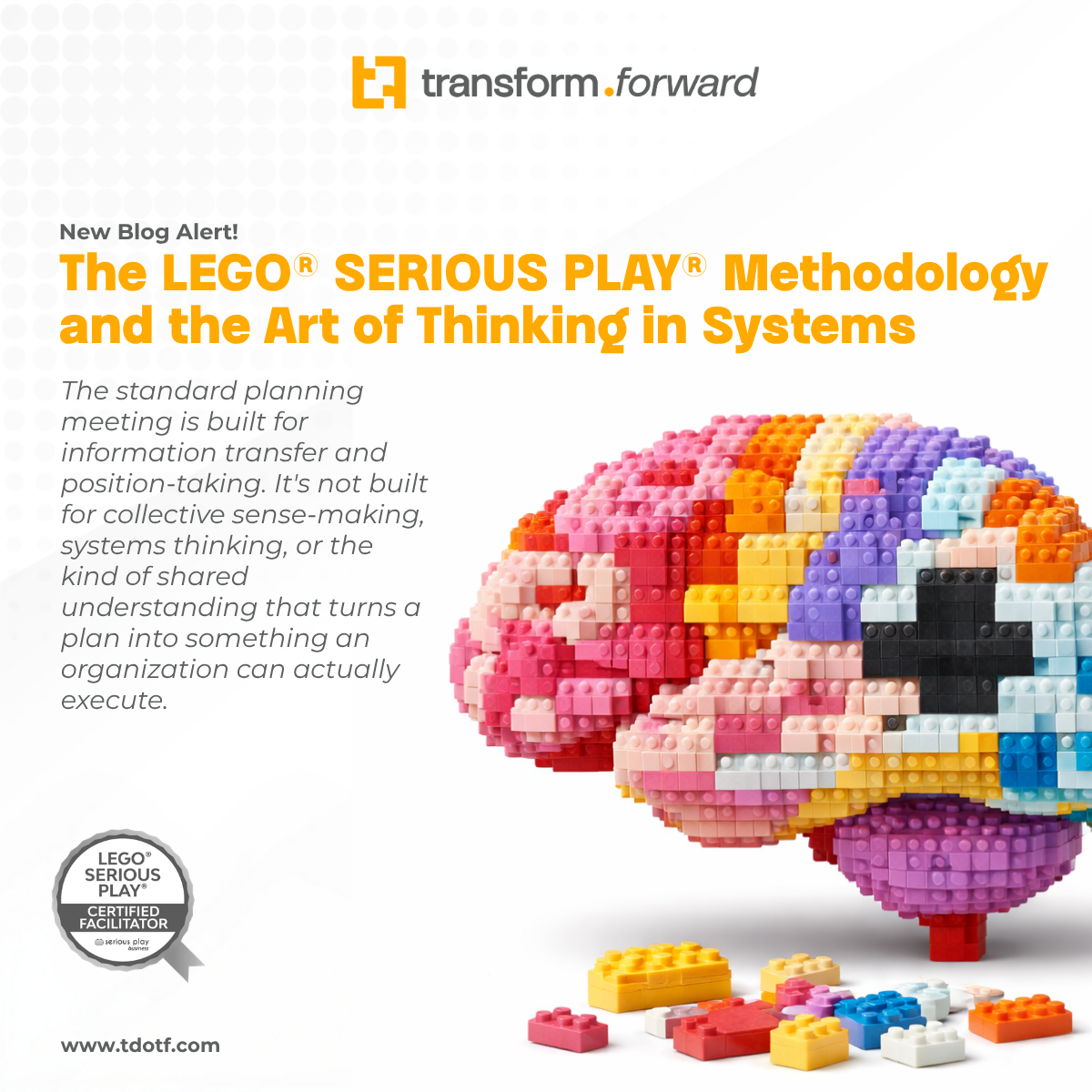
The LEGO® SERIOUS PLAY® Methodology and the Art of Thinking in Systems
Most strategic planning conversations aren't failing because of bad strategy. They're failing because the format of the conversation isn't built for the kind of thinking that good strategy requires. In this post, we make the case that LEGO® SERIOUS PLAY® is less a creativity tool and more a systems thinking methodology, one that helps leadership teams externalize complexity, surface hidden interdependencies, and build the shared understanding that makes a plan executable. If your planning process keeps producing the same results, the problem might not be the plan. It might be the medium.
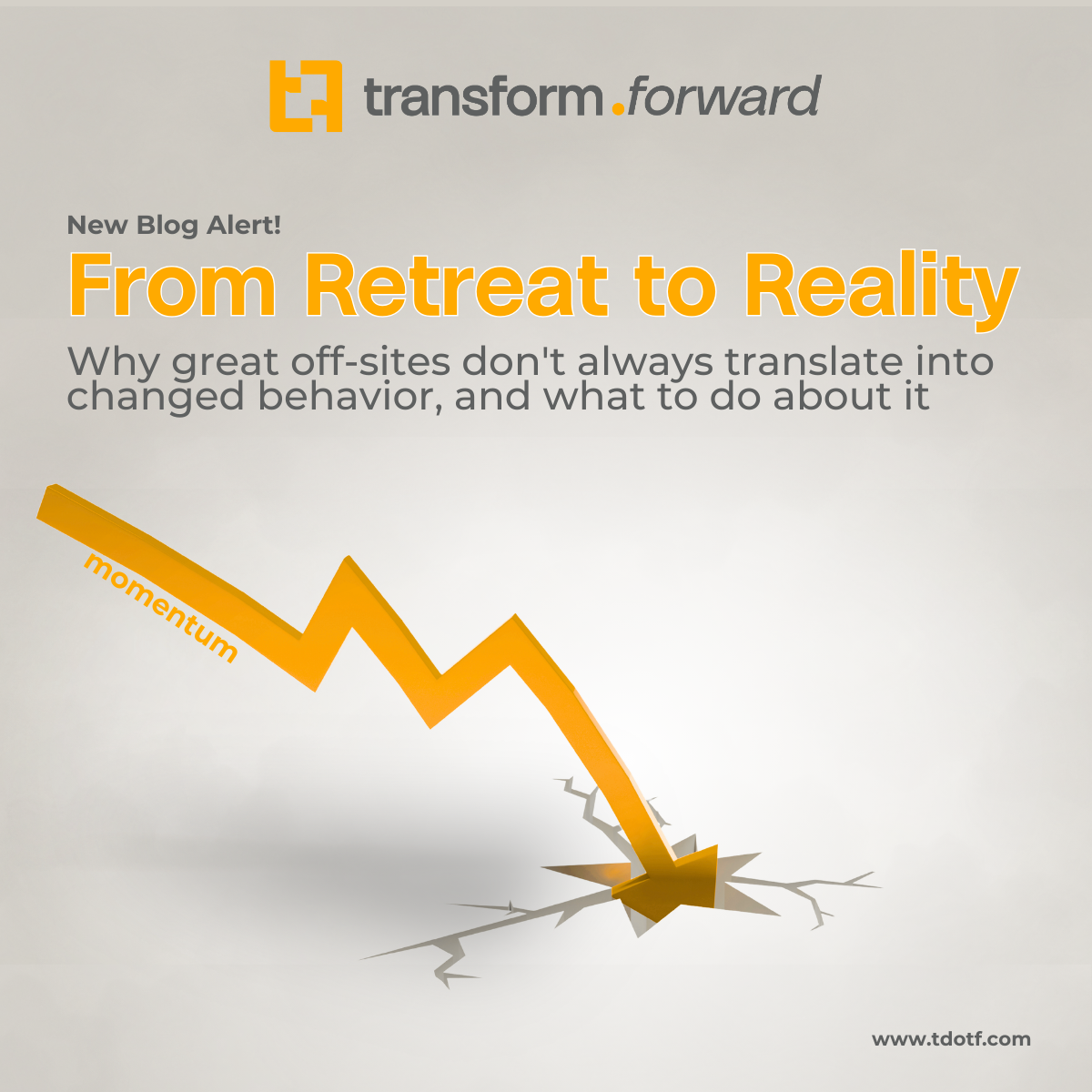
From Retreat to Reality - Why great off-sites don't always translate into changed behavior, and what to do about it.
You leave the off-site energized. Commitments made, action items assigned, everyone's initials on the shared doc. And then Monday happens. If that arc feels familiar, you're not alone. And it's not a leadership problem. It's a design problem. Most retreats are built to produce a powerful experience. Very few are built to produce a changed organization. Those are different design briefs, and confusing them is costing leadership teams real momentum. In this post, we unpack why the inflection point problem happens, what the research tells us about behavioral change and context, and four concrete design choices that give post-retreat commitments a fighting chance.
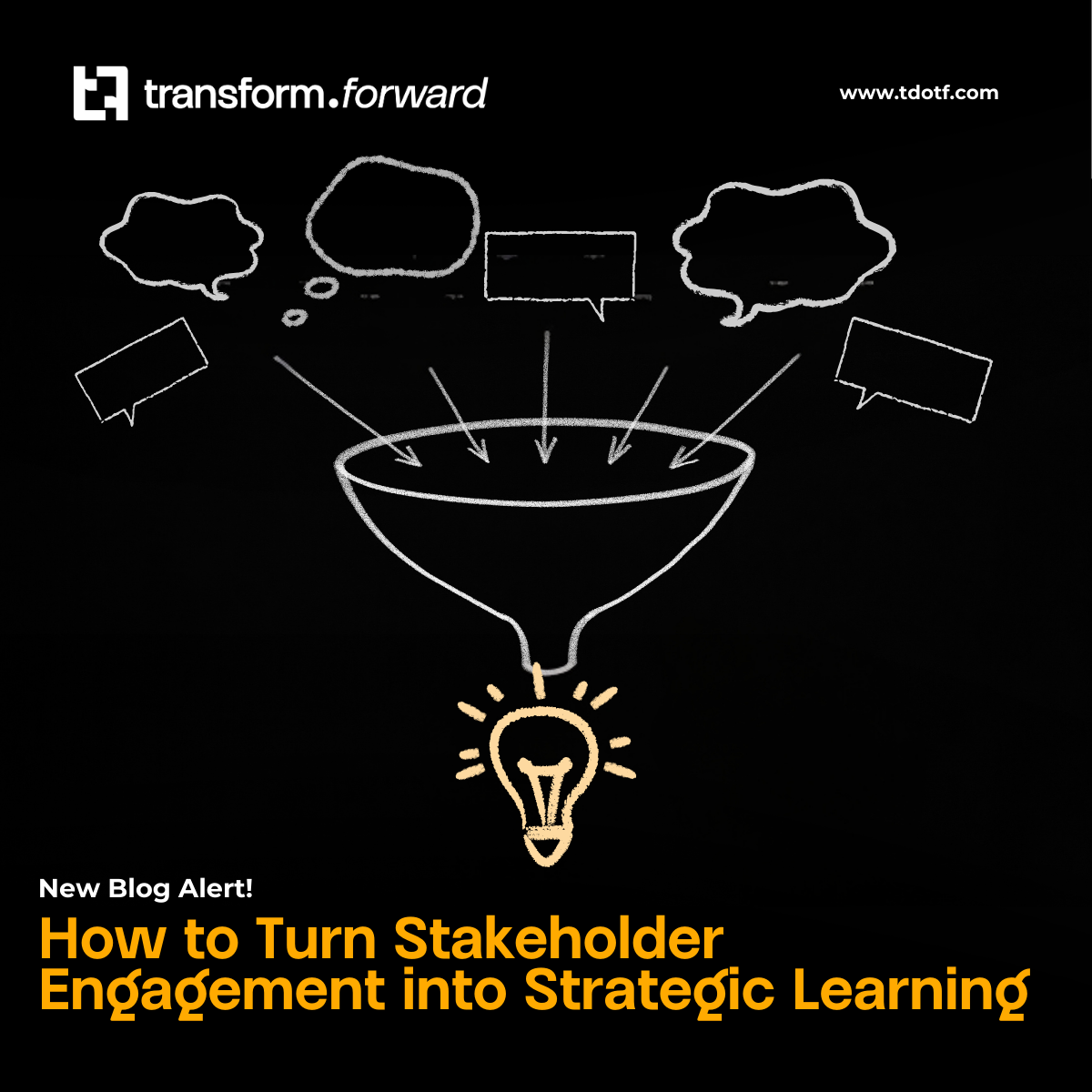
How to Turn Stakeholder Engagement into Strategic Learning
Many organizations are good at listening. They host focus groups, distribute surveys, and facilitate retreats. But listening is not the same as learning. In this post, we explore how to design stakeholder engagement that drives real strategic insight. From sharper question design to disciplined interpretation and focused decision-making, we outline what it takes to move from input to action.
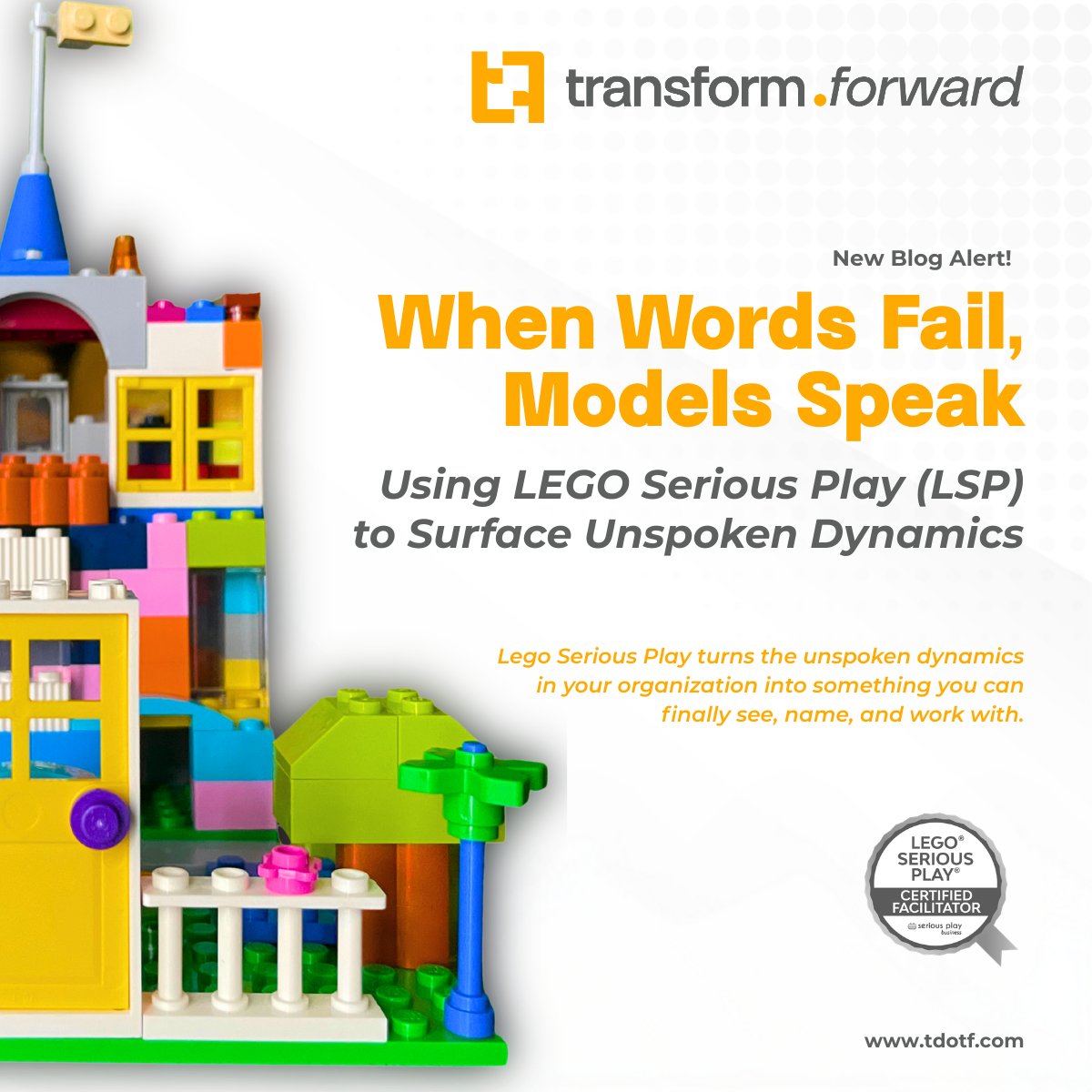
When Words Fail, Models Speak - Using LEGO Serious Play (LSP) to Surface Unspoken Dynamics
Most leadership teams leave their retreats with flip charts full of language everyone agreed to and almost no one fully believes. That is not a failure of intelligence or intention. It is a failure of medium. When organizations face genuine complexity, change, or conflict, structured verbal dialogue consistently underperforms, not because people do not have something true to say, but because the conditions of the room make it nearly impossible to say it. LEGO Serious Play (LSP) operates from a different premise. Rather than asking people to find the right words for what they know, it asks them to build it. And what gets built in those rooms is frequently the most honest organizational data available.
Strategic Plans as Social Contracts
Strategic plans are often treated as technical outputs, but they communicate far more than direction and priorities. In this post, we explore how planning functions as a relational process that signals legitimacy, authority, and shared responsibility. By reframing strategic plans as social contracts, leaders can better understand how process design, communication, and implementation shape trust, engagement, and long-term organizational commitment.
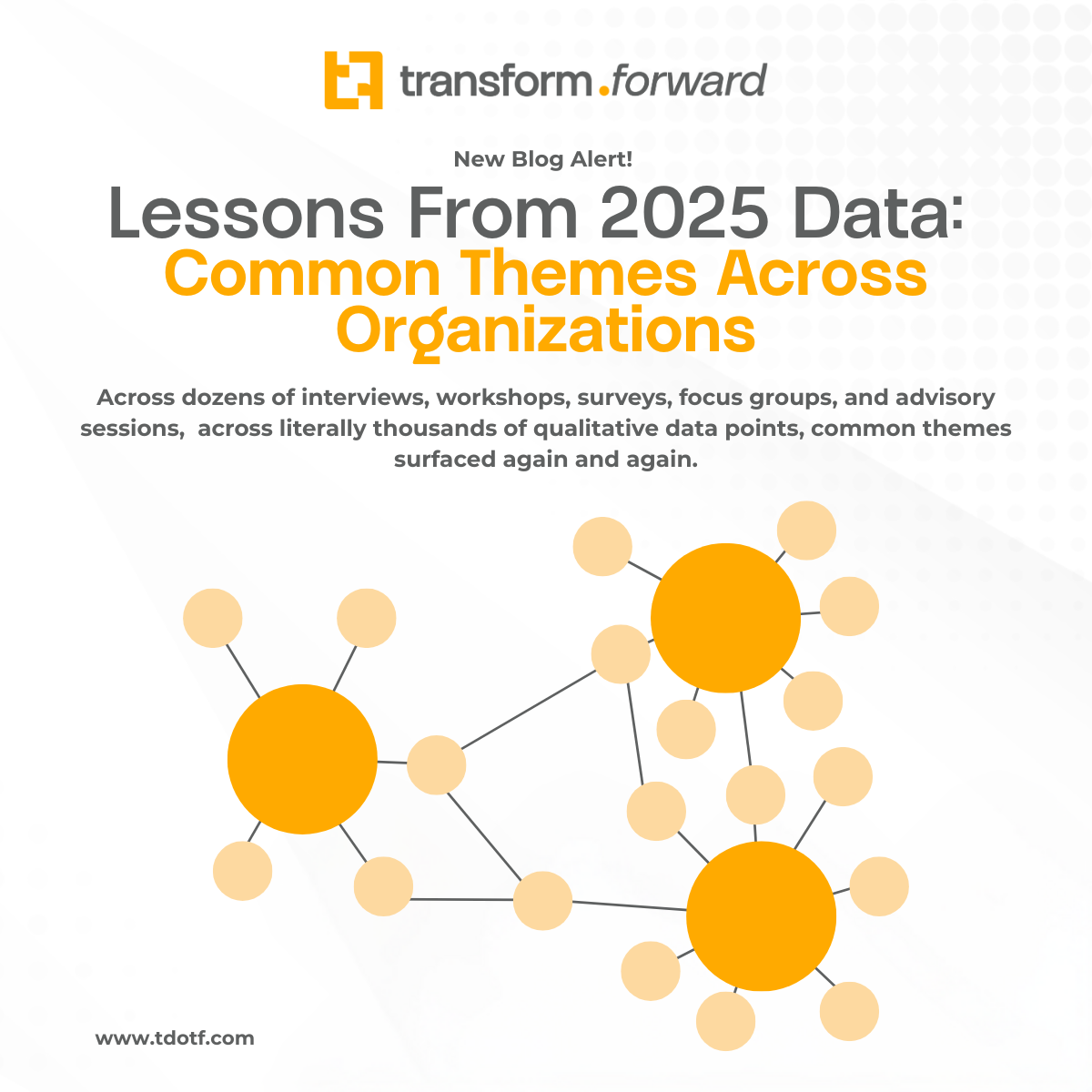
Lessons From 2025 Data: Common Themes Across Organizations
In 2025, transform.forward partnered with organizations across education and nonprofit sectors to facilitate strategic planning, organizational effectiveness studies, and stakeholder engagement initiatives. Despite differences in size, structure, and mission, common themes emerged. Stakeholders believed deeply in their organization’s purpose, yet often lacked shared clarity on priorities, decision-making, and direction. This blog explores the most consistent patterns observed across thousands of qualitative data points, and what they reveal about how organizations can build clarity, alignment, and momentum in an increasingly complex environment.
What Leaders Actually Need From Research
Leaders don’t just need research that reports findings. They need research that helps them understand their people, their organization, and what’s realistically possible next. This post explores why translation, interpretation, and synthesis matter just as much as rigor — and how research becomes most powerful when it supports real decision-making.

Beyond Slack and Snacks: Building a Remote Culture with TENs
The real issue with remote work isn't the distance; it's the misaligned assumptions. This post introduces the TENs Framework (Traditions, Expectations, Norms) - a blueprint for moving beyond abstract cultural "vibes" to a shared, intentional operating system that drives clarity and high performance.

The Human Blueprint for Change: Why Plans Fail and How to Lead Through It
Even the most brilliant strategic change will fail if employees don't understand it, trust it, or see their place in it. This post breaks down the three core psychological needs - Clarity, Trust, and Fairness - that leaders must address to move beyond flawed plans to human-centered execution.

From Wonder to Tenacity: Leading Change Through the Lens of Working Genius
Every leader has blind spots in how they lead change. This post uses the Working Genius framework to reveal where you thrive and where you may unintentionally stall the change process. Learn to put your genius to work to lead with less friction and more impact.
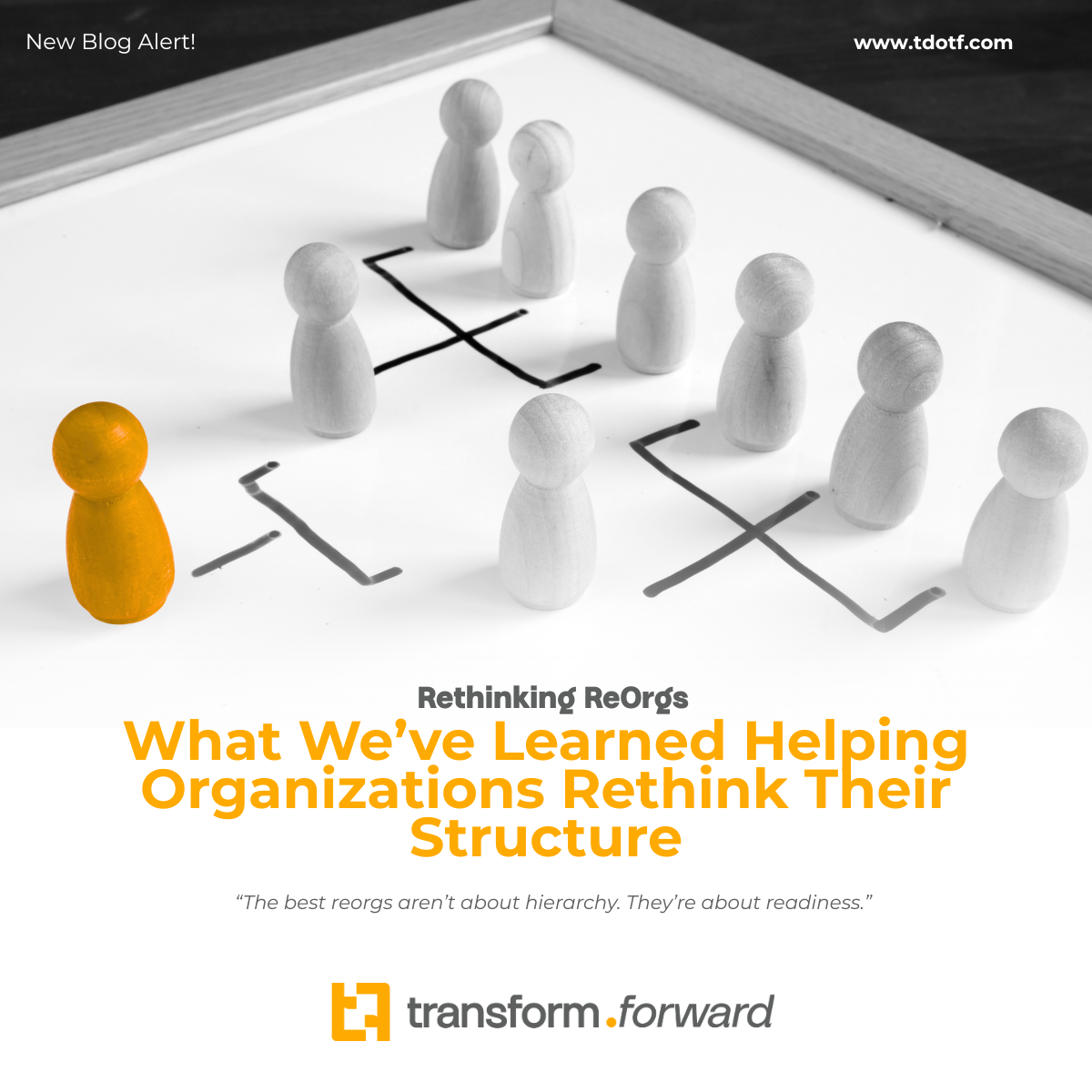
Rethinking ReOrgs
The call usually starts the same way: "We need a new org chart." But a reorg is rarely about structure alone. This post explores why a people-driven approach to organizational effectiveness is a better path to clarity and long-term impact than simply redrawing lines on a chart.

Why “Change Starts Here” Is More Than a Tagline
Most transformation doesn’t happen overnight. It starts with someone willing to say, “This could be better.” Our founder shares the story behind our tagline, "Change Starts Here," and explains why every meaningful shift requires intentionality—not a cookie-cutter approach.