
Forward Thinking
Welcome to Forward Thinking, where we explore the ideas, insights, and strategies shaping the future of leadership, organizational change, and culture. This is where we share what we’re learning in the field—what’s working, what’s shifting, and what leaders need to be paying attention to. Grounded in practice and informed by research, our posts are designed to help you think more critically, act more intentionally, and lead more effectively in times of change.
The Myth of the Invisible Facilitator
In certain facilitation circles, neutrality gets treated like a professional virtue. Stay out of the way, hold the space, trust the process. It's a lovely idea, except it's also fiction, and fairly convenient for anyone who'd rather not reckon with the authority the role actually carries. In this post, we explore what facilitation actually controls, why the org chart doesn't stay in the lobby, and what it means to lead a room with real intentionality.
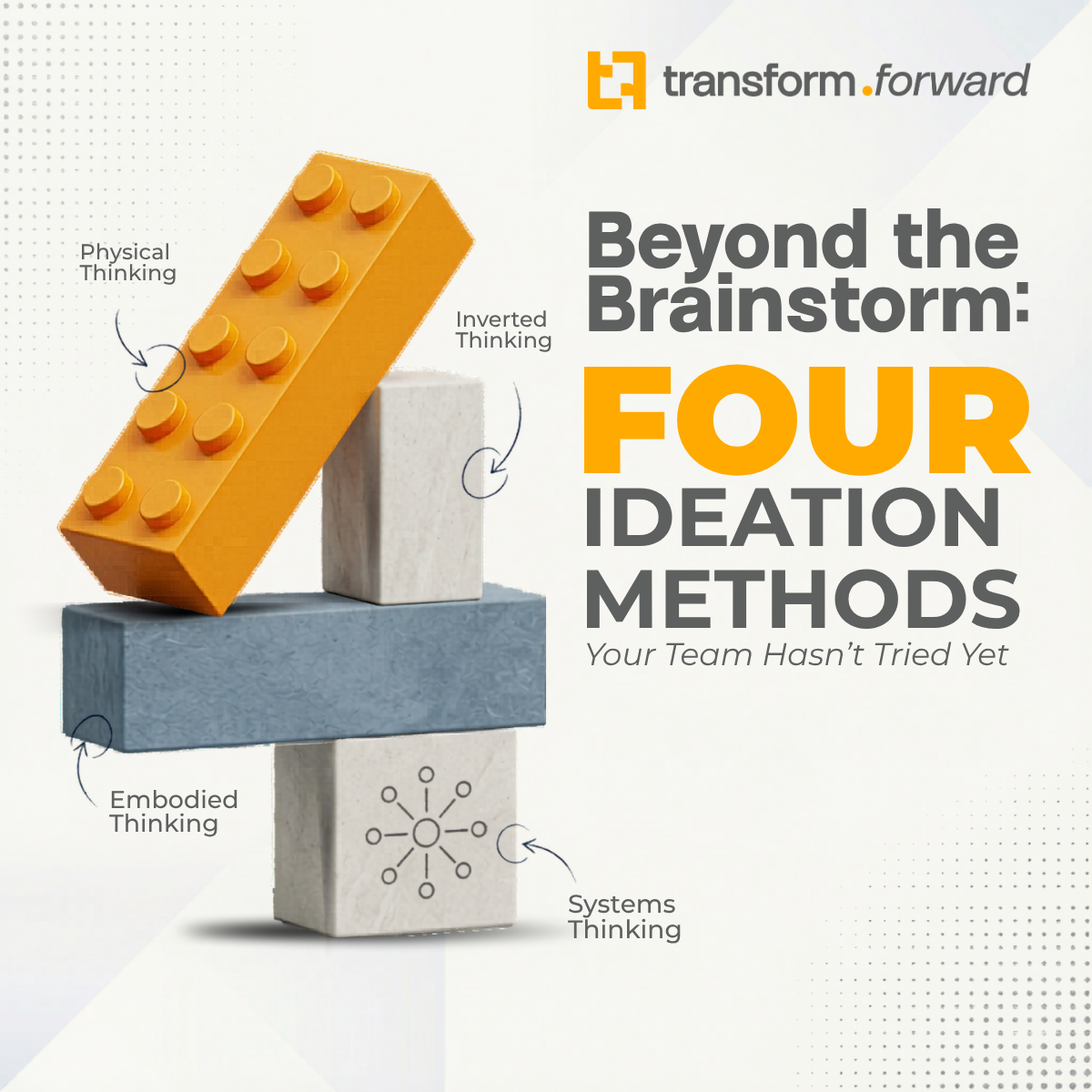
Beyond the Brainstorm: Four Ideation Methods Your Team Hasn't Tried Yet
Most teams have a default ideation format. It probably involves a whiteboard, a pack of markers, and someone who volunteered to be the scribe. It works well enough for routine problems — but for strategic planning, culture design, and decisions with long downstream consequences, "well enough" starts to show its limits.
Here are four ideation methods worth adding to your toolkit. Each one generates a distinct mode of engagement and surfaces things that a standard brainstorm doesn't — from LEGO® SERIOUS PLAY® to future wheels ideation to the surprisingly powerful pre-mortem.
The Cognitive Case for Getting Your Hands Involved
We think better when our hands are involved. The cognitive science behind that concept has been established for decades, and the practice of designing working sessions around it remains genuinely rare, even among people who care deeply about how their organizations make decisions. Giving people something physical to work with, something to sort, place, draw, or arrange, surfaces assumptions that conversation keeps invisible, encodes decisions that verbal agreement leaves fragile, and produces the kind of clarity that most planning sessions promise and rarely deliver.